

Services
Criminal & Civil Attorneys in Montgomery, AL
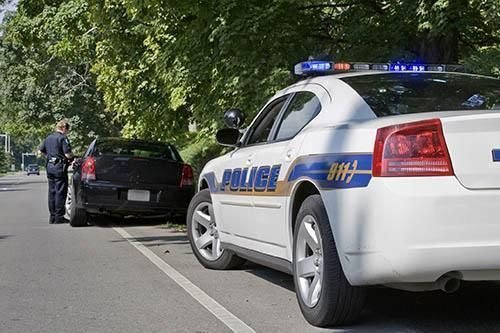
Traffic Ticket Lawyers in Montgomery, Alabama
The payment link on an Alabama traffic ticket is not just a convenience. Paying the fine — by mail, by card or by bank transfer — counts as a guilty plea and a waiver of your right to a trial. Barfoot & Schoettker represents drivers in Montgomery and Central Alabama who would rather understand that choice before they make it.
What comes out the other side is a conviction. It carries points toward a license suspension, it stays on your driving record after the points stop counting, and federal law lets an insurer pull that record for rating and underwriting. For a lot of drivers the fine turns out to be the cheapest part of the ticket. The sections below cover how Alabama traffic cases work and what options may be available.
Examples of traffic violations we handle:
- Speeding, including speeding in a school or construction zone
- Passing a stopped school bus
- Not wearing a seat belt
- Driving without safety seat for child in car
- Driving without insurance
- Failing to stop at a stop sign or red light
- Making an illegal U-turn
- Failing to yield right of way
- Failing to signal turn
- Broken vehicle lights
- Warrants for unpaid tickets
Don’t just pay your ticket. Contact us first to avoid any unnecessary consequences.
What to do first after a traffic ticket
Read the date on the ticket as a deadline, not a trial setting. The Fifteenth Judicial Circuit says so on its own traffic-court page: "The Court date on your copy of the ticket is NOT A TRIAL DATE." To get a trial you have to appear on that date and plead not guilty.
Do not let the date pass. That court warns that if you fail to appear, "a warrant may be issued for your arrest, your driver’s license may be suspended by the Alabama Law Enforcement Agency, the fine may be increased, and any bond posted may be forfeited." An unpaid ticket does not sit quietly. It compounds.
What paying the ticket actually costs
Most people treat a traffic ticket as a bill. It is not a bill. It is the Uniform Traffic Ticket and Complaint, which Rule 19(A), Ala. R. Jud. Admin., makes the charging document "in all nonfelony traffic cases filed in all courts of the State." Rule 19(C)(1) attaches the same guilty plea to all three (3) routes — magistrate, mail, or card.
Why does the distinction matter? Because a conviction and a paid bill are read very differently afterward. Points attach to the conviction, and they stop counting toward suspension two (2) years from the conviction — not the violation. ALEA is explicit that the entry itself "remains on a driver’s record" after that, and the Driver’s Privacy Protection Act, 18 U.S.C. § 2721(b)(6), lists insurers among those to whom a state may lawfully release that record for rating or underwriting.
While no lawyer can say what a carrier will do with a given entry, the entry is there, it is lawfully available, and you put it there by paying.
Alabama's point system, and what actually takes a license
The schedule is Ala. Admin. Code r. 760-X-1-.07, last amended August 14, 2021. Speeding one (1) to twenty-five (25) over the limit is two (2) points; twenty-six (26) or more over is five (5). Failure to yield and passing a stopped school bus are five (5) each. Reckless driving is six (6). Most everything else that moves is worth two (2).
Twelve (12) points inside twenty-four (24) months is where ALEA starts suspending, at sixty (60) days, climbing to three hundred sixty-five (365) days at twenty-four (24) points or more. Two speeding tickets do not get you there. Two speeding tickets, a failure to yield and a school bus violation inside two (2) years do.
Which court has your ticket, and the appeal almost nobody takes
Ala. Code § 12-12-51 gives the district court "exclusive original jurisdiction of misdemeanor prosecutions for traffic infractions, except ordinance infractions prosecuted in municipal courts." Ala. Code § 12-14-1 gives each municipal court its own ordinances plus concurrent jurisdiction over state-law conduct chargeable as an ordinance violation. Nearly every Alabama city has adopted the state traffic code as ordinance, which is why the same charge can land in either court.
Here is the part that surprises people. Ala. Code § 12-14-70(a) sends "all appeals from judgments of municipal courts" to the circuit court "for trial de novo," and Ala. Code § 12-12-71 does the same from district court, where a jury may be requested in the notice of appeal. De novo means a new trial, not a review of the old one.
The window survives a guilty plea. Rule 30.1(a), Ala. R. Crim. P., allows an appeal within fourteen (14) days of judgment, and its Committee Comments state that a defendant "shall be allowed to appeal to the circuit court for a trial de novo even after entering a plea of guilty."
If you hold a CDL, this is a different problem
49 C.F.R. § 384.226 directs that a state "must not mask, defer imposition of judgment, or allow an individual to enter into a diversion program that would prevent a CLP or CDL holder’s conviction for any violation, in any type of motor vehicle, of a State or local traffic control law" from reaching the CDLIS driver record. Read that phrase again: in any type of motor vehicle. The rule follows the license.
49 C.F.R. § 383.51 sets what those convictions do. Speeding fifteen (15) or more over the limit, reckless driving, improper or erratic lane changes, following too closely, and a traffic violation arising out of a fatal accident are "serious traffic violations." Two (2) from separate incidents inside three (3) years disqualifies a driver for sixty (60) days; three (3), for one hundred twenty (120). Ala. Code § 32-6-49.11 carries the same periods.
Those violations can reach the commercial license from a personal vehicle too, though the federal table conditions that on the conviction resulting in revocation, cancellation or suspension of the license.
The tickets that carry more than a fine
Speeding. Ala. Code § 32-5A-171 sets the ceilings at seventy (70) miles per hour on interstates, sixty-five (65) on other four-lane highways, fifty-five (55) on other highways, and thirty (30) in an urban district. The point value turns on one line: twenty-six (26) over is five (5) points, not two (2).
Reckless driving is not a speeding ticket with a worse name. Ala. Code § 32-5A-190 defines it as driving "carelessly and heedlessly in willful or wanton disregard for the rights or safety of persons or property." A first conviction carries five (5) to ninety (90) days, a fine of $25 to $500, or both, and subsection (c) makes clear it is not a lesser included offense of DUI.
Passing a stopped school bus escalates faster than any other common charge. Under Ala. Code § 32-5A-154 a first conviction is a fine of $150 to $300; a second adds one hundred (100) hours of community service and a thirty (30) day suspension; a third, two hundred (200) hours and ninety (90) days. A fourth is a Class C felony.
Driving without insurance is a Class C misdemeanor under Ala. Code § 32-7A-16(a)(1). The registration suspension that follows ends on proof of coverage plus a $200 reinstatement fee, or $400 for a second violation, and Ala. Code § 32-7A-12 waives the fee if coverage was in force on the verification date.
Driving while suspended or revoked compounds the original problem. Ala. Code § 32-6-19 makes it a misdemeanor punishable by $100 to $500 and up to one hundred eighty (180) days, and the Director of Public Safety may add a six (6) month revocation.
The seat belt ticket runs the other way. Ala. Code § 32-5B-5 caps the fine at $25, and Ala. Code § 32-5B-7 provides the conviction shall not "be entered on the driving record of any individual charged." No points, no record entry.
A DUI is not a traffic ticket
A charge under Ala. Code § 32-5A-191 is a criminal case with its own administrative license proceeding running alongside it. If that is what you are holding, read what to do if you have been charged with a DUI and our page on criminal representation, and call us. Do not treat it as a ticket, and do not pay anything.
Traffic tickets in Montgomery specifically
Which building your case is in depends on who wrote the citation. Tickets from Montgomery Police officers inside the city limits go to the Montgomery Municipal Court on Madison Avenue; tickets from State Troopers and county deputies go to the Montgomery County District Court. An appeal from either lands in the Circuit Court for the Fifteenth Judicial Circuit.
Two local limits are worth knowing in advance. A guilty plea by mail is not available to a defendant convicted of two (2) or more traffic offenses in the preceding twelve (12) months, and on a no-insurance ticket a defendant need not appear if proof of coverage is furnished before the court date. Interstate 65 and Interstate 85 meet here, so many tickets in this county go to people who do not live in it.
Frequently asked questions
Does paying a traffic ticket in Alabama count as pleading guilty?
Yes. Rule 19(C)(1), Ala. R. Jud. Admin., provides that remitting the fine and costs by mail, credit card or bank transfer "constitutes a guilty plea and waiver of trial," signed waiver section or not.
How many points does it take to suspend a license in Alabama?
Twelve (12) points in a twenty-four (24) month period, at sixty (60) days. Ala. Admin. Code r. 760-X-1-.07 runs the ladder up to three hundred sixty-five (365) days at twenty-four (24) points or more.
How long do points stay on my Alabama driving record?
Two (2) years from the date of conviction, not the violation. ALEA states the conviction "remains on a driver’s record" after that, without point value.
Can I still fight a ticket after I already paid it?
Possibly, but the window is short. Rule 30.1(a), Ala. R. Crim. P., allows an appeal for a trial de novo within fourteen (14) days of judgment, and the Committee Comments confirm that right survives a plea of guilty.
Will hiring a lawyer keep points off my record?
No lawyer can promise that, and be wary of one who does. What a lawyer can do is read the charge, tell you what it carries under the point schedule, and appear for you.
Do I have to go to court myself?
Often not. In many cases we are able to appear on a client’s behalf, which is why out-of-state drivers call us. It depends on the charge and the court.
I have a CDL. Does a ticket in my personal vehicle matter?
It can. 49 C.F.R. § 384.226 bars a state from masking, deferring judgment on, or diverting a CDL holder’s conviction "in any type of motor vehicle," and 49 C.F.R. § 383.51 reaches non-commercial convictions that result in suspension, revocation or cancellation of the license.
Does a seat belt ticket go on my driving record?
No. Ala. Code § 32-5B-7 provides a safety belt conviction shall not "be entered on the driving record of any individual charged." The fine is capped at $25.
Talk to a Montgomery traffic ticket lawyer
Barfoot & Schoettker is a small Montgomery firm. We handle traffic and misdemeanor matters in the municipal and district courts of central Alabama.
If you have been cited, contact us for a free consultation at (334) 834-3444. Bring the ticket, and bring it before the court date — a drivers options narrow considerably the moment that fine is paid.