

Services
Personal Injury Attorneys in Montgomery, AL
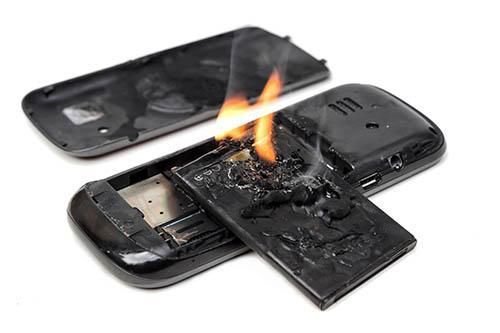
Defective Product Lawyers in Montgomery, Alabama
If a product injured you while you were using it the way it was meant to be used, you may have a claim against the company that made or sold it. Barfoot & Schoettker handles defective product cases in Montgomery and Central Alabama — design defects, manufacturing defects and failures to warn.
Alabama does not follow the product liability rule you will read about on a national website. Rather than adopt the no-fault strict liability rule of Restatement (Second) of Torts § 402A, the Supreme Court of Alabama built its own doctrine in 1976, and it kept the concept of fault. That difference is not academic. It lets a manufacturer raise defenses a no-fault rule would not allow, and those defenses are usually what the case turns on.
What to do first after an injury from a product
Get treated, and tell the provider what caused the injury. A record saying a burn came from a space heater is worth more later than one saying only that there was a burn.
Then keep the product. This is what people get wrong. Do not return it for a refund, do not let the seller take it back, do not have it repaired, and do not throw away the broken pieces. In most of these cases the product is the case. Once it is gone, no one can prove what failed.
Photograph it where it sits, before anything is moved. Keep the box, the manual, the warning label, the receipt and every model, serial or lot number on the item. Those numbers are how a lawyer identifies the manufacturer, which matters more in Alabama than in most states.
Be careful with recorded statements. Alabama is a contributory negligence state, and how you describe using the product is what the other side is listening for. Then call a lawyer. The deadline is two (2) years, but the product usually disappears long before that.
How the AEMLD works
Under the AEMLD, a manufacturer, supplier or seller who markets a product not reasonably safe when applied to its intended use in the usual and customary manner is, in the Court's words, negligent as a matter of law. Casrell, 335 So. 2d at 132. You do not have to prove the company knew: scienter is supplied as a matter of law.
A plaintiff must show he was injured by a product sold in a defective condition unreasonably dangerous to him as the ultimate user, that the seller was in the business of selling such a product, and that it reached the user without substantial change in the condition in which it was sold.
A “defect” here is whatever makes a product unreasonably dangerous — “not fit for its intended purpose” — measured against what an ordinary buyer would contemplate. Whether it crosses that line is a jury question.
Two consequences follow, and they cut opposite ways. The care a company took in making the product is immaterial; it cannot defend by proving how careful it was. However, an adequate warning can obviate the danger, which is why these cases so often become arguments about the label.
The defenses Alabama gives a manufacturer
This is where Alabama parts company with the rest of the country. Atkins said the practical distinction between this doctrine and the Restatement is that Alabama allows defenses a no-fault rule does not. There are three (3).
Lack of causal relation. A defendant may show there was no causal relation in fact between its handling of the product and the defective condition — that it received the product already defective, did not contribute to the defect, and had no better chance to inspect it than the consumer. Two (2) limits: it is unavailable to a manufacturer where the defect is in a third party's component part, and to a defendant selling under its own trade name.
Assumption of risk. A defendant may show the product was unavoidably unsafe and the danger apparent or adequately warned about. A user who discovers the defect, is aware of the danger, and nevertheless proceeds unreasonably to use it is barred.
Misuse. Using the product in a way it was not intended to be used — Atkins's own example of contributory negligence fitting a product case.
Who can be held responsible
By its own terms the doctrine reaches not only the manufacturer but also the supplier and the seller. Casrell, 335 So. 2d at 132. However, the Legislature narrowed that in 2011. Under Ala. Code § 6-5-521(b), no product liability action may be asserted against a distributor, wholesaler, dealer, retailer or seller unless it also made or assembled the product, exercised substantial control over its design, testing, manufacture, packaging or labeling, or altered it in a way that was a substantial factor in causing the harm. The statute states its own intent: to protect distributors “who are merely conduits of a product.”
Simply put, the store that sold you the item usually is not the defendant. The manufacturer is, which is why the model and serial numbers matter so much. There is one relief valve: under § 6-5-521(c), a claimant who cannot identify the manufacturer despite a good faith exercise of due diligence may sue the seller.
Evidence and deadlines
In a product case the evidence is an object, and objects get thrown away. That is what a preservation letter is for — a written demand to everyone holding the product, its parts and its records to keep them. Alabama recognizes a claim against a third party who negligently destroys evidence, and one element of it is a duty created by “a specific request.” Smith v. Atkinson, 771 So. 2d 429 (Ala. 2000).
A claim for negligence, wantonness or liability under the AEMLD must be brought within two (2) years after it accrued. Ala. Code § 6-2-38(l); Spain v. Brown & Williamson Tobacco Corp., 872 So. 2d 101 (Ala. 2003). The clock runs from the first legally recognizable injury, not from the day the product was bought. A wrongful death case is brought by the estate's personal representative within two (2) years of the death. Ala. Code § 6-5-410.
One point falls the injured person's way. Alabama has no products statute of repose. The Legislature passed one — a flat ten (10) year cutoff from the product's first use — and the Supreme Court of Alabama struck it down under Article I, § 13 of the Alabama Constitution. Lankford v. Sullivan, Long & Hagerty, 416 So. 2d 996 (Ala. 1982). An older product is not automatically out of reach.
Alabama's contributory negligence rule
Alabama is one of four (4) states — with Maryland, North Carolina and Virginia — that still applies pure contributory negligence. On an ordinary negligence claim, a plaintiff whose own carelessness proximately contributed to the injury recovers nothing. Not a reduced amount. Nothing. The Supreme Court of Alabama had the chance to replace the rule with comparative fault and declined, leaving any change to the Legislature. Golden v. McCurry, 392 So. 2d 815 (Ala. 1980). It is not a defense to wantonness.
Here is what makes defective product cases different, and what most national content gets wrong. In Dennis v. American Honda Motor Co., 585 So. 2d 1336 (Ala. 1991), the Court held that contributory negligence relating to accident causation will not bar a recovery under the AEMLD. A helmet that fails is supposed to protect the rider whether or not he caused the wreck.
Read that carefully; it is narrower than it sounds. Dennis left lack of causal relation, misuse and assumption of risk in place, and contributory negligence still bars any ordinary negligence count in the same lawsuit. The AEMLD does not swallow those counts — they are pleaded alongside it. Tillman v. R.J. Reynolds Tobacco Co., 871 So. 2d 28 (Ala. 2003). Ultimately, that is why these cases are pleaded on more than one theory.
What affects the value of a defective product case
No lawyer can tell you what a case is worth over the phone, and one who does should worry you. What can be said is which facts move the number: whether the product was preserved; how permanent the injury is; how well the records tie the injury to the product; and whether the manufacturer can be identified.
Alabama measures death cases differently, and families are rarely told this early. Under the AEMLD the wrongful act is placing an unreasonably dangerous product on the market, and the damages are punitive — awarded to punish the conduct and deter it, not to measure what the family lost.
Defective product cases in Montgomery
Products are not only bought here, they are built here. Hyundai Motor Manufacturing Alabama's plant on the south side of our city is capable of producing up to 399,500 vehicles per year at full capacity, and its suppliers are spread across the River Region.
Venue is worth understanding early. A case filed in state court here goes to the Circuit Court for the Fifteenth Judicial Circuit. Because the maker of a product is usually a citizen of another state, these cases reach federal court more often than a car wreck does: where the parties are citizens of different states and more than $75,000 is in controversy, the case can be heard in the Middle District of Alabama, Northern Division. 28 U.S.C. § 1332(a).
Frequently asked questions
What is the AEMLD?
The Alabama Extended Manufacturer's Liability Doctrine — this state's substitute for the strict liability rule of Restatement (Second) of Torts § 402A. It comes from Casrell and Atkins, both decided May 21, 1976, and keeps the concept of fault.
Do I have to prove the manufacturer knew the product was dangerous?
No. Scienter is supplied as a matter of law, and proof that the company used all possible care is not a defense. What must be shown is that the product was unreasonably dangerous when it left the seller.
How long do I have to file a defective product claim in Alabama?
Generally two (2) years, running from the first legally recognizable injury. Ala. Code § 6-2-38(l). A wrongful death case must be brought by the estate's personal representative within two (2) years of the death. Ala. Code § 6-5-410.
Can I sue the store that sold me the product?
In many cases, no. Ala. Code § 6-5-521(b) shields a seller that was merely a conduit, unless it also made the item, controlled its design or labeling, or altered it. Where the manufacturer cannot be identified despite due diligence, § 6-5-521(c) allows a claim against the seller.
Can I still recover if the accident was partly my fault?
It depends on the claim. Contributory negligence bars an ordinary negligence count. On an AEMLD count, Dennis v. American Honda Motor Co., 585 So. 2d 1336 (Ala. 1991), holds that contributory negligence relating to accident causation does not bar recovery, though misuse and assumption of risk remain defenses.
Does a warning label defeat my case?
Not automatically. Casrell says an adequate warning can obviate the danger, but whether a warning was adequate is usually contested.
The product is more than ten years old. Is it too late?
Not on that basis alone. Alabama's ten-year products statute of repose was held unconstitutional in Lankford v. Sullivan, Long & Hagerty, 416 So. 2d 996 (Ala. 1982). The two-year deadline from the injury still applies.
What does it cost to talk to a lawyer about a defective product?
Nothing. We handle these cases on a contingency fee, and there is never a fee for legal services unless we collect for you.
Talk to a Montgomery defective product lawyer
Barfoot & Schoettker is a small Montgomery firm whose practice focuses on personal injury. We handle defective product cases across central Alabama.
If you or a family member was hurt by a product, contact us for a free case evaluation at (334) 834-3444. There is never a fee for legal services, unless we collect for you. Before you call anyone, put the product somewhere safe and leave it as it is.
Important Resources:
- Airbag Did Not Deploy in a Montgomery Wreck: Is That a Product Case?
- How to Build a Defective Product Case
- Encountering a Defective Product: Here Is What to Do
- Philips Sleep Apnea BiPAP/CPAP Recall - Potential to Cause Cancer
- Talcum Powder Litigation: What You Need to Know
- Wrongful Death Claims in Alabama
- Alabama's Two-Year Deadline After an Injury